
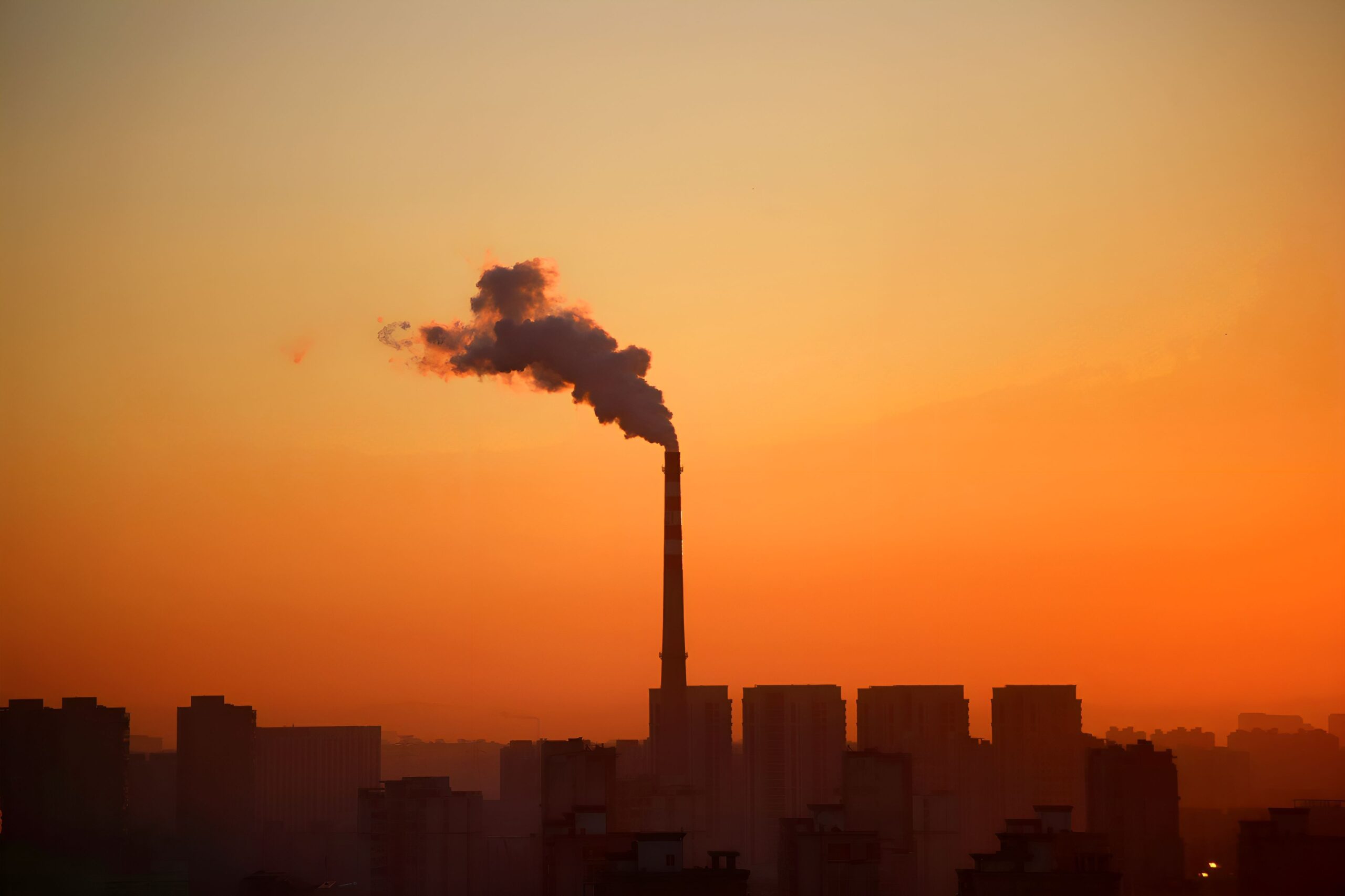
Differdange, a southern town in Luxembourg was once described in terms that are difficult to imagine today. For much of the twentieth century, heavy industry shaped not only the town’s economy but also its appearance. Historical accounts describe blackened roofs, streets and gardens, while industrial dust settled on windows, laundry, furniture and crops. Measurements from the 1950s found extremely high dust deposition close to the steelworks, with much of that material containing iron compounds.
Our previous article reviewed the history of steelmaking in Luxembourg and more specifically in Differdange and its environmental implications for the residents today.
Today, the picture is very different. Nevertheless, visible dust is still being reported by the residents and monitoring systems are finding more than that.
What does an electric steelworks emit?
Differdange still has the capacity to produce around 1.35 million tonnes of crude steel per year. What has changed dramatically is how that steel is produced. A century ago, production depended on an integrated chain of ore preparation, coke, blast furnaces and conventional steelmaking, with large diffuse emissions from many stages. Today, a much more compact electric-arc-furnace route melts mainly scrap steel and produces comparable industrial-scale output with far fewer major installations and substantially lower emissions.
Modern electric-arc steelmaking is considerably cleaner than traditional blast-furnace production, particularly for CO₂. But melting scrap at temperatures above 1,600°C still produces several categories of air pollutants.
ArcelorMittal itself identifies four principal groups of emissions from its Luxembourg industrial facilities: CO₂, nitrogen oxides (NOx), sulfur oxides (SOx) and dust.
Particulate matter and metal-containing dust are produced when scrap is handled, melted, transferred between vessels, cast, cut and rolled. Scrap itself contains iron and alloying metals, and its surface may carry coatings, rust, oils or other contaminants. Fine particles can therefore contain metals such as iron, chromium, nickel, manganese, zinc and lead.
NOx is mainly generated by high-temperature combustion, including natural-gas burners used in furnaces and reheating processes.
SOx can arise from sulfur contained in fuels, scrap or other materials entering the process.
Dioxins, furans and PAHs can form under certain combustion conditions, particularly where organic contaminants are present. Luxembourg’s environmental monitoring specifically follows these pollutants because of their toxicity.
Electric furnaces may also generate carbon monoxide and volatile organic compounds, depending on furnace conditions and contaminants in scrap.
The important point is that the pollutants do not all leave the factory through one chimney. There is the stack emissions and the diffuse emissions.
Stack emissions
Modern steel plants are designed to capture the concentrated fumes generated inside the electric arc furnace. At ArcelorMittal’s Luxembourg sites, furnace gases are extracted into a central system. They pass through cooling and treatment stages, including spark separation, activated-carbon injection and fabric filtration before being discharged. Activated carbon helps capture pollutants such as dioxins, while bag filters remove a very large proportion of particulate matter.
Diffuse emissions
A substantial part of the remaining problem comes from what are known as diffuse or fugitive emissions. These are emissions that escape directly into the factory building or surrounding air rather than entering the main exhaust system.
They can occur while:
- scrap is handled and charged;
- molten steel is transferred;
- ladles are emptied or treated;
- slag is poured and cooled;
- semi-finished steel is cut;
- material is transported;
- rolling operations disturb oxide scale and dust.
To address this issue to a certain extent and after years of discussions between the company, the municipality, residents and the Environment Administration, sensors were installed around the site and an inventory of diffuse sources was undertaken. ArcelorMittal says four priority areas were identified: two associated with secondary metallurgy and two in the rolling mill.
The company is now installing a large additional extraction system designed to capture these emissions closer to where they originate. The system can extract around 1.2 million cubic meters of air per hour, and ArcelorMittal expects it to reduce diffuse dust emissions by around 80% once fully connected and calibrated by the end of 2026.
Luxembourg operates an urban-industrial monitoring station in Differdange, close to ArcelorMittal, measuring PM10 and heavy metals. In 2024, the Environment Administration reported that annual PM10 concentrations and regulated metals in fine particles remained well below the applicable legal limits.
However, other monitoring has identified specific issues. One of the most notable is chromium. Luxembourg’s long-term biomonitoring program found that while concentrations of many heavy metals declined substantially since the 1990s, chromium concentrations at Differdange and Esch-sur-Alzette increased in more recent years. The Environment Administration linked this increase to chromium-containing material used by ArcelorMittal and reported that modifications to the installations were being undertaken.
More recently, the 2024 environmental activity report recorded an unusual increase in lead in biomonitoring samples from both Esch-sur-Alzette and Differdange between July and September 2024. According to the Administration, the levels appeared primarily related to ArcelorMittal’s industrial operations, and the authority was working with the company to identify the exact source.
Furthermore, residents of Differdange report seeing pale or gray dust settling on a terrace, car or garden furniture while official annual PM10 measurements remain below the legal limit. The Environment Administration distinguishes between fine airborne particles, such as PM10, and heavier dust fallout. Larger particles settle relatively quickly and therefore may create very localized nuisance around an industrial source without remaining suspended long enough to dominate conventional PM10 measurements.
That is particularly relevant in Differdange, where the government and ArcelorMittal have specifically monitored dust deposition and diffuse emissions around the steelworks. A dedicated 2024–2025 campaign in Differdange and neighboring Sanem measured particle fallout and formaldehyde, further demonstrating that localized industrial emissions remain an active monitoring issue.
In the era of the “black city,” pollution could be visible across the entire landscape. Today it is more controlled, more localized and substantially lower — but not absent. The fact that ArcelorMittal is investing tens of millions of euros specifically to capture diffuse emissions in Differdange suggests that the remaining emissions are not merely a historical curiosity.
In the next article in this series, we will look at the water system: where the steelworks gets its water, how much is reused, how industrial wastewater is treated and what eventually leaves the site.
Have you read our previous insight in this series?
Steel Production in Luxembourg: Environmental Implications of a Continuing Industrial Activity