
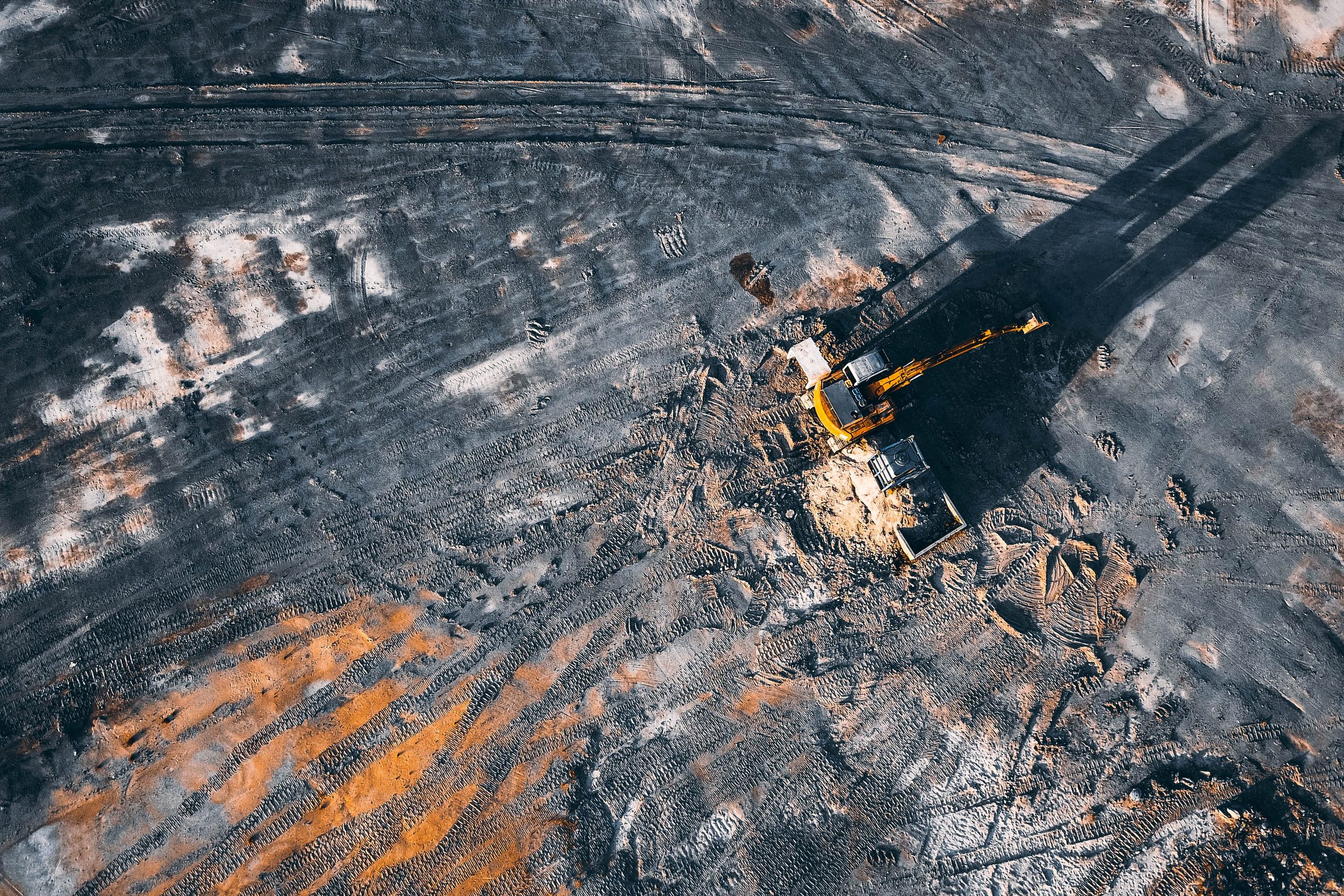
Soil pollution caused by steel production is more persistent than air pollution. Metals and persistent organic chemicals deposited over decades can remain in the ground long after furnaces, coke plants and industrial buildings have disappeared. Even though air pollution has a more acute and immediate effect on well being and quality of life of humans, soil contamination perhaps is the most enduring environmental legacy of Luxembourg’s steel era.
Steel production can contaminate soil through several routes: deposition of metal-containing dust, leakage of oils and fuels, storage of scrap and raw materials, disposal of slag and sludge, contaminated wastewater and historical spills. Older integrated steelworks added another important source: coke production, which generated coal tar and other residues rich in persistent organic pollutants.
Typical contaminants associated with former iron and steel sites include lead, zinc, chromium, nickel and other metals, petroleum hydrocarbons, PAHs, benzene and related aromatic hydrocarbons, phenols, cyanides and, depending on historical activities, PCBs.
Depending on the contaminant, soil chemistry and geology, pollutants can migrate downward into groundwater, which is why Luxembourg treats many former industrial locations as combined soil-and-groundwater problems rather than simply contaminated surface land. The Environment Administration’s investigation procedures explicitly include soil and groundwater sampling when potentially contaminating activities have taken place.
Differdange: an active steel site with an industrial legacy underneath
The ArcelorMittal site in Differdange remains active today, while it occupies land that has been used for heavy industry for well over a century. Historical steel production involved blast furnaces, raw-material storage, slag handling, oils, fuels, waste deposits and decades of atmospheric fallout.
The municipality’s CASIPO map for Differdange identifies numerous areas as potentially contaminated because of previous land uses. Luxembourg maintains a national database known as CASIPO — Cadastre des sites potentiellement pollués. The database includes locations where current or historical activities could potentially have contaminated soil or groundwater.
The surrounding environment also received contaminants through air deposition. Luxembourg’s long-term monitoring shows that heavy metals, dioxins and furans historically affected the industrial basin around Differdange, Esch-sur-Alzette and Schifflange, although concentrations have declined considerably since the 1990s as installations were modernized or closed. The Environment Administration’s long-term biomonitoring results document this decline.
Belval: building a university on a former steelworks
Campus of University of Luxembourg in Belval sits on a land which was formerly used for steelworks and as such is a striking example of contaminated land reuse in Luxembourg.
After the last blast furnace was shut down, extensive investigations were carried out before redevelopment. Historical studies were followed by drilling campaigns in 1999 to determine which pollutants were present, where they were located, the volume of affected soil and the condition of groundwater. AGORA’s account of the remediation of former industrial land describes how this work formed the basis for the redevelopment strategy.
Polluted zones were identified and managed according to their location and the intended future use of the land. Some contaminated soil was covered in place, while other material was moved. AGORA describes this approach as part of the wider redevelopment of Belval.
Belval was redeveloped using risk-based land management: contamination presenting unacceptable exposure or environmental risks was removed or contained, while some material could remain where the pathway between the contaminant and people or groundwater was adequately controlled.
What contaminants are associated with the southern steel basin?
Publicly accessible Belval documentation confirms that soil and groundwater pollution was sufficiently significant to require mapping, drilling, remediation and long-term management. Historical and environmental monitoring has examined substances including lead, chromium, zinc, cadmium, nickel, PAHs, PCBs, dioxins and furans.
Lead in particular has been identified as a strong tracer of historical industrial activity. Long-term biomonitoring found the highest lead contamination levels around steel-industry locations including Esch-Belval and Schifflange, while also identifying an enduring residual industrial footprint in the south. These findings are documented in the Environment Administration’s long-term monitoring report.
Current monitoring around Belval still detects industrial deposition. In 2024, Esch-sur-Alzette’s monitoring program found that most heavy-metal deposition remained within reference values, but zinc deposition exceeded the reference value used in Luxembourg near the steel site. The same monitoring described the overall current industrial impact around Belval as moderate near the plant and much lower farther away.
These are atmospheric-deposition measurements rather than direct soil concentrations, but they illustrate the pathway through which decades of emissions contributed to industrial soils in the region.
There are also steel-waste sites outside Belval itself. A European research project carried out at a Profilarbed waste deposit in Schifflange mapped pollutants in soil, water, air and vegetation around steel-industry waste containing blast-furnace slag, filter residues and refractory materials. The study concluded that the particular deposit had affected its surroundings moderately, but it also illustrates how steel waste can create long-term combined soil-and-water contamination issues. The project is documented by the EU CORDIS research database.
Soil keeps the record
Modern furnaces can be fitted with filters. Wastewater systems can be redesigned. Industrial plants can close. Soil keeps the record much longer.
Belval demonstrates that former steelworks can successfully be transformed into universities, homes, offices and public spaces. Differdange demonstrates the additional challenge of managing a century-old industrial footprint while steel production continues on the same site.
Luxembourg has developed a system for identifying, investigating and managing these locations, but detailed analytical information remains much less immediately visible to the public than the existence of the sites themselves.
For a country whose modern prosperity was built in large part on steel, that underground legacy is significant. It survives not only in preserved blast furnaces and industrial architecture, but also in soils and groundwater that must still be mapped, monitored, remediated where necessary and, in some places, deliberately contained beneath the towns that grew out of the steel industry.
Have you read our previous insight in this series?