
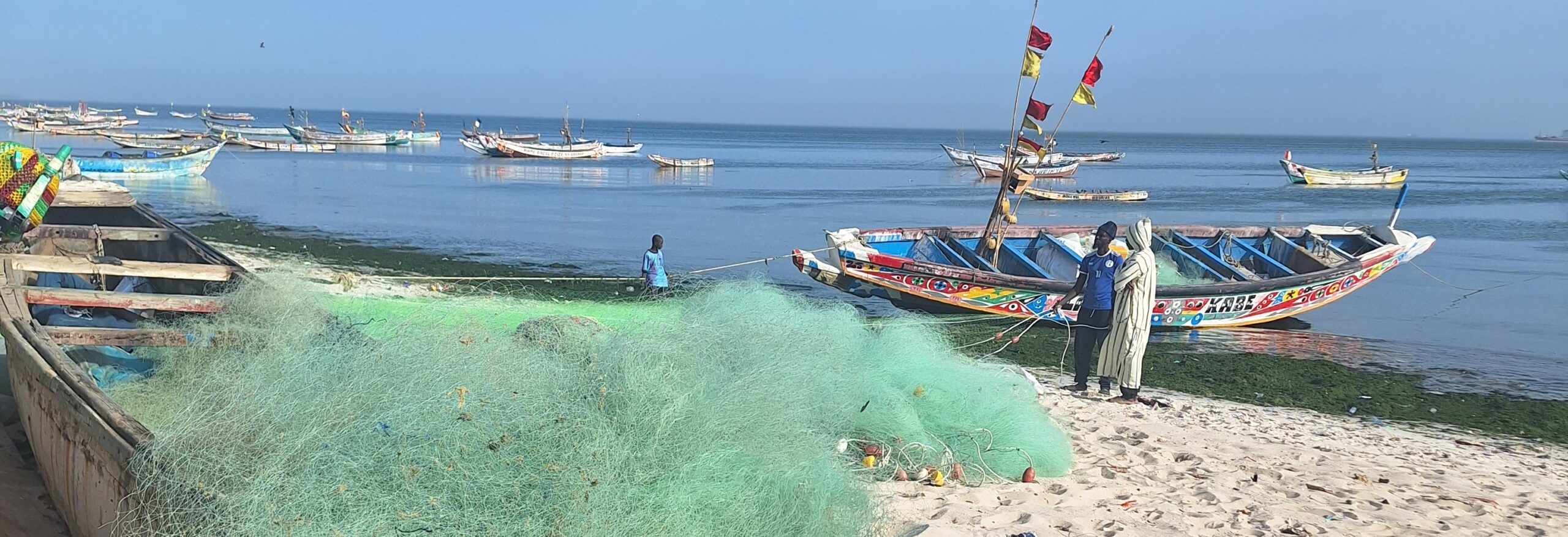
Plastic waste remains one of the world’s most persistent environmental challenges. Since the United Nations Environment Assembly adopted Resolution 5/14 in March 2022, governments have been negotiating a legally binding global instrument on plastic pollution. More than four years later, the process has still not produced a treaty. The latest negotiations in Geneva in August 2025 ended without consensus, exposing deep divisions not only over implementation and finance, but even over the basic scope of the treaty: should it address plastic pollution across the full life cycle of plastics, including production, or focus mainly on waste management?
The missing piece of puzzle in addressing plastic waste
Meanwhile, plastic production and waste continue to grow. The OECD has reported that global plastics production rose from 2 million tonnes in 1950 to 460 million tonnes in 2019, and without stronger action, plastics use and waste generation could increase by around 70% by 2040 compared with 2020 levels. By 2060, plastic waste is projected to almost triple, with less than one fifth recycled.
At the heart of the issue is a simple but unresolved problem: many countries still lack functional, financially sustainable waste management systems that cover their full geography. Through work on numerous UN-supported plastic waste management projects, one pattern becomes clear. Countries often struggle not because they lack declarations, policies or legislations, but because collection, sorting, transport, financing, enforcement, and local ownership are not built into one practical system.
More developed countries have largely solved basic waste collection, but they have not solved what to do with all plastic waste generated within their own economies. Too often, the gap is shifted elsewhere through exports to countries that already struggle to collect and process everyday waste. The Basel Convention plastic waste amendments, in force since January 2021, brought more plastic waste trade under international control, but a legal framework alone cannot deliver implementation where institutions lack capacity, resources, or practical understanding of their obligations.
This is where the global conversation often becomes too abstract. Terms such as “circularity”, “extended producer responsibility”, and “life-cycle approaches” are important, but they cannot replace basic systems on the ground. A community without reliable collection does not need another slogan. It needs a working route, a financing model, a responsible operator, an enforcement mechanism, and a reason for people to participate.
Plastic pollution is also not only a marine issue. While ocean plastic receives significant attention, mountain ecosystems remain under-recognised. Remote high-elevation communities often face weak infrastructure, difficult transport, seasonal tourism pressure, and limited municipal capacity. In some protected mountain regions, plastic bans exist on paper but are poorly communicated and barely enforced. Bottled drinks can be transported thousands of metres above sea level, yet the empty bottles often cannot find their way back down into a proper disposal or recycling system.
In the absence of a system, people create their own solutions: dumping, open burning, informal collection, or simply leaving waste where it falls. These are rational responses to a broken infrastructure problem, but they are not sustainable solutions.
The challenge is not whether solutions exist. They do. Door-to-door collection, deposit-return systems, targeted incentives for rural communities, local aggregation points, public-private partnerships, and small-scale processing models can all work when designed for the actual geography, economy, and behaviour of the community. In some European rural areas, municipalities collect household waste directly for a small per-bag fee. Deposit-return machines are increasingly common and can incentivise people to bring PET bottles back to supermarkets or collection points.
The real question is why such systems remain so difficult to design, finance, implement, and maintain in many parts of the world.
This is where Fussbann Group contributes
Fussbann Group develops digital solutions that help governments, municipalities, international organizations, and private actors operationalize existing waste-management policies more effectively. Our focus is on improving implementation, increasing operational efficiency, and integrating artificial intelligence into existing waste-management systems.
Rather than adding another layer of policy language, we build tools that help institutions understand what is happening on the ground, track progress, identify gaps, improve coordination, and make better decisions. Digital platforms, AI-supported workflows, data dashboards, reporting systems, and operational tools can help turn policy commitments into practical, measurable action.
The plastic waste crisis is not only a treaty problem. It is an implementation problem. And implementation requires more than ambition. It requires systems, data, coordination, and digital tools that make action possible.