
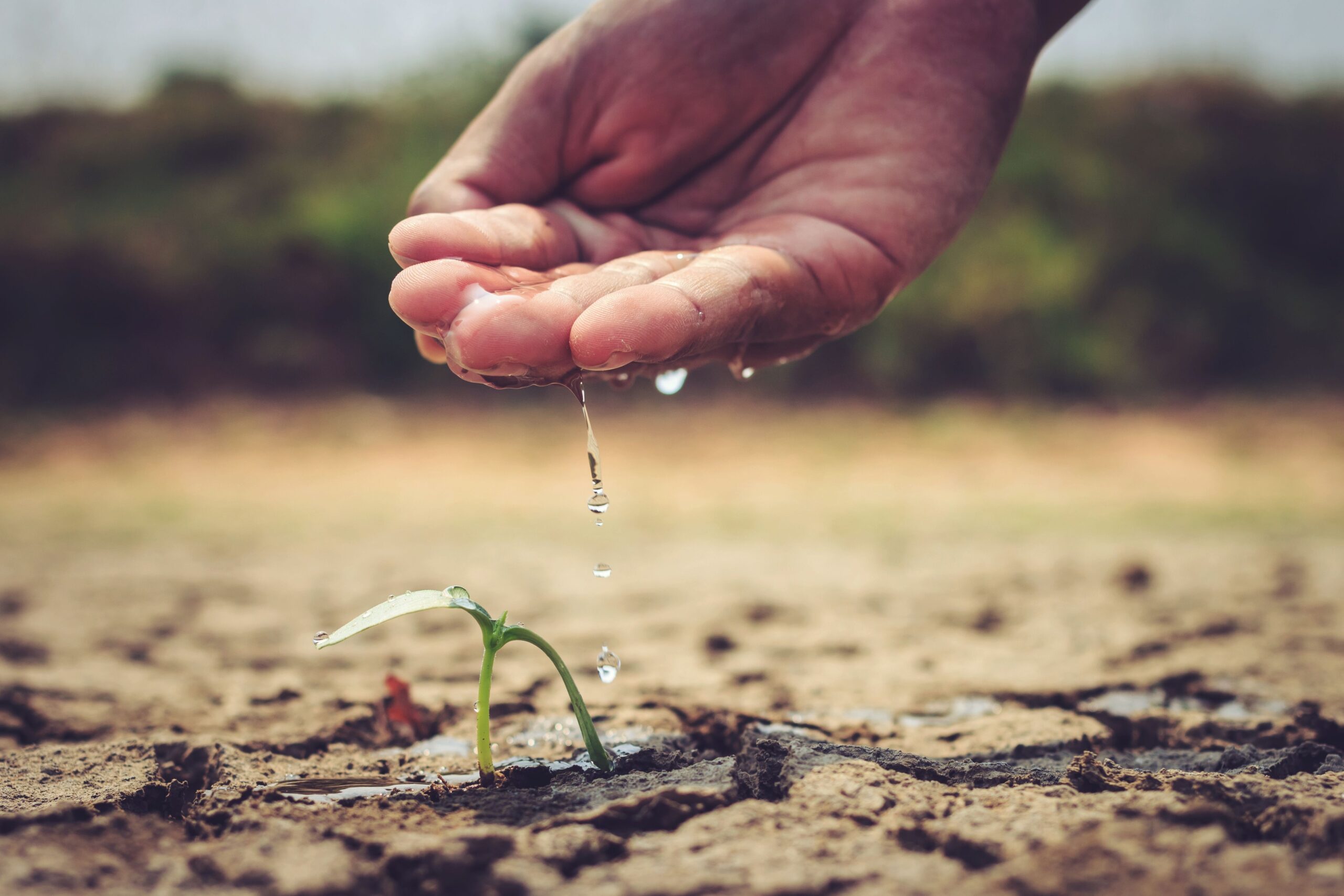
Heatwaves are becoming more frequent, more intense, and more visible in daily life. In Luxembourg, this is no longer an abstract climate projection. In July 2026, Luxembourg activated a vigilance phase for drinking-water supply and urged residents, municipalities and businesses to reduce non-essential water use during the ongoing heatwave and drought period, according to the Luxembourg government. The government also confirmed that abstraction of water from rivers and surface water bodies, except the Moselle and subject to specific provisions, remains prohibited until further notice.
Several municipalities have also introduced restrictions on non-essential water use, including measures targeting private pools, car washing, fountains, high-pressure cleaning, and the watering of lawns, parks and sports fields, as reported by RTL Today. These are no longer distant climate-adaptation scenarios. They are municipal management issues happening now.
The signs are visible in daily urban life. In communes such as Esch-sur-Alzette and Differdange, grass has dried out, trees are under stress, and public green areas are struggling. These are not only aesthetic losses. Trees and vegetation help cool streets, reduce heat-island effects, protect soil, absorb stormwater and make cities more liveable during heatwaves.
The question is not only why people are being asked not to fill swimming pools or water lawns with potable water. The deeper question is what it takes for municipalities to move away from reactionary measures to strategic planning in the face of future drought periods.
The Warning Signs Are Already Here
If heatwaves and droughts become more common, emergency restrictions on water use cannot remain the main response.
Luxembourg’s Water Management Administration has warned that drought and high temperatures are affecting rivers and streams, with water levels remaining particularly low. This is why water abstraction from rivers and surface water bodies has been banned across most of the country, as reported by Chronicle.lu.
The pressure is not limited to Luxembourg. France has also faced severe water stress during recent heatwaves, with many departments placed under water restrictions and water suppliers reporting major increases in consumption during periods of extreme heat.
Potable Water Should Not Be the Default for Every Use
Drinking water is treated to a high standard in Europe. Yet in many European cities, potable water is still used for applications that do not always require it: flushing toilets, watering lawns, washing outdoor surfaces, filling pools, irrigating public greenery, and sometimes cooling or cleaning operations.
Potable water should be protected for drinking, cooking, hygiene and essential public needs.
The City of Luxembourg notes that household drinking-water consumption is around 180 litres per person per day. Only a small share is used for drinking and cooking. Roughly one third is used for baths, showers and personal hygiene, another third for toilets, one sixth for laundry and dishes, and one sixth for uses such as washing cars, watering plants, cooking and drinking.
The infrastructure has been designed around one dominant model: treat water to drinking-water quality, distribute it everywhere, use it once, and send it away as wastewater. This model is increasingly fragile.
A more resilient approach would separate water uses by quality. Rainwater, treated greywater and reclaimed wastewater can be used for applications such as irrigation, toilet flushing, street cleaning, industrial processes and certain cooling systems, depending on health standards and local regulations. Not every use requires drinking-water quality.
Rainwater Storage Should Become Normal Infrastructure
Rainwater storage should not be treated as a niche ecological feature. It should become common urban infrastructure. Read our article Revolutionize Water Management: Unlock the Power of Rainwater Catchment.
Residential buildings, schools, municipal buildings, business parks, sports facilities and public gardens can collect and store rainwater for non-potable use. In normal periods, stored rainwater can reduce demand on drinking-water networks. In hot and dry periods, it can help maintain trees, parks and urban vegetation without using potable water.
This matters especially in municipalities where trees and green areas are already drying during heatwaves. Cities should use urban greening as a climate-adaptation measure, and as such they must also plan how that vegetation will survive during drought.
Planting trees is not enough. Municipalities need watering strategies, storage capacity, priority maps, drought-response plans and monitoring systems that show which areas are under stress.
Wastewater Reuse Must Enter the Mainstream
Wastewater should also be seen differently. Properly treated wastewater can be reused for selected purposes instead of being treated only as something to discharge.
This does not mean putting untreated or unsafe water back into circulation. It means designing systems where water is treated to the appropriate standard for the appropriate use. Reclaimed water can support irrigation, industrial uses, street cleaning, construction activities and, in some systems, indirect water-cycle replenishment.
For Luxembourg and Europe more broadly, this should become part of a serious water-resilience strategy. The future water system should not be linear. It should be circular where possible: collect, treat, reuse, store, monitor and allocate water according to need and quality.
Data Centres Add Another Water Question
Water management is also becoming more important because of the growth of digital infrastructure.
Luxembourg has long been discussing Google’s planned data centre in Bissen. The project has faced scrutiny over energy use, cooling systems, waste-heat management and environmental impact. Luxembourg Times reported in December 2025 that environmental groups said key information on energy use, cooling systems, waste-heat management and construction impact remained unclear.
In 2026, the project continued to face public and environmental scrutiny. RTL Today reported that Mouvement Ecologique filed a formal appeal against the proposed data centre, warning that the project falls short of legal and environmental standards.
This matters because data centres are not only digital infrastructure. They are also energy, cooling, land-use and heat-management infrastructure. Any large data-centre project should be assessed as part of the wider water, energy and heat-resilience system of the country.
Warmer Rivers, Warmer Systems, Higher Risk
Water temperature is another issue that receives too little public attention.
During heatwaves, rivers warm naturally because of high air temperatures, low flows and reduced cooling capacity. Industrial and energy infrastructure can add pressure when water is withdrawn and discharged back into rivers.
The Cattenom nuclear power plant in France has previously been affected by high Moselle water temperatures. RTL Today reported that during the 2019 heatwave, Moselle water entering the plant had reached 26.4°C, leaving limited margin before discharge-temperature limits became an issue.
In June 2026, Luxembourg Times reported that the Moselle had reached 29°C, while the normal threshold referred to in the article was 28°C. The same article noted that the temperature of the Moselle must not be raised by more than 1.5°C between water intake and discharge at Cattenom.
This does not mean that every warm-water problem in southern Luxembourg can be attributed to one source. River temperature is affected by weather, drought, flow levels, urbanisation, industrial discharge and energy infrastructure. But it does show why water temperature must be treated as part of water management, not as a side issue.
Warmer water can affect aquatic life, drinking-water treatment, algae growth and infrastructure performance.
What Better Water Management Should Include
Better water management does not only mean asking citizens to use less water during a crisis. It means building systems that make cities more resilient before the crisis arrives.
Luxembourg and other European countries should accelerate practical measures such as mapping water demand by neighbourhood, season and use; detecting leakage and abnormal consumption in real time; prioritising potable water for essential uses; expanding rainwater storage in residential and public buildings; using non-potable water for irrigation, street cleaning and selected municipal services; developing treated wastewater reuse where safe and appropriate; monitoring the health of urban trees and green spaces during heatwaves; creating drought-response plans for municipalities; integrating water planning into data-centre, industrial, housing and urban-development decisions; and tracking water temperature, river flows and ecological stress more systematically.
The key is changing the way we have looked at water resources and investing in urban projects that recycle and re-utilize water more than once.
From Emergency Restrictions to Digital Water Resilience
Water restrictions are necessary during periods of stress. But they are not a strategy.
If every hot summer leads to emergency bans on watering, filling pools or washing cars, then the system is reacting to drought rather than adapting to it.
The more important challenge is to build circular water systems that are monitored, diversified and digitally managed. That means using data to understand demand, infrastructure, leakage, storage, reuse potential, vegetation stress and local risk. It also means designing cities where drinking water is not the default solution for every non-drinking use.
Fussbann Group develops digital solutions that help public authorities, municipalities and private actors operationalise environmental management. In water management, this means supporting systems that can map demand, monitor infrastructure, identify stress points, optimise resource use and integrate alternative water sources into daily operations.
Heatwaves are no longer exceptional. Drought pressure is no longer theoretical. Europe needs to move from emergency water restrictions to intelligent water management — before the next crisis becomes normal.