
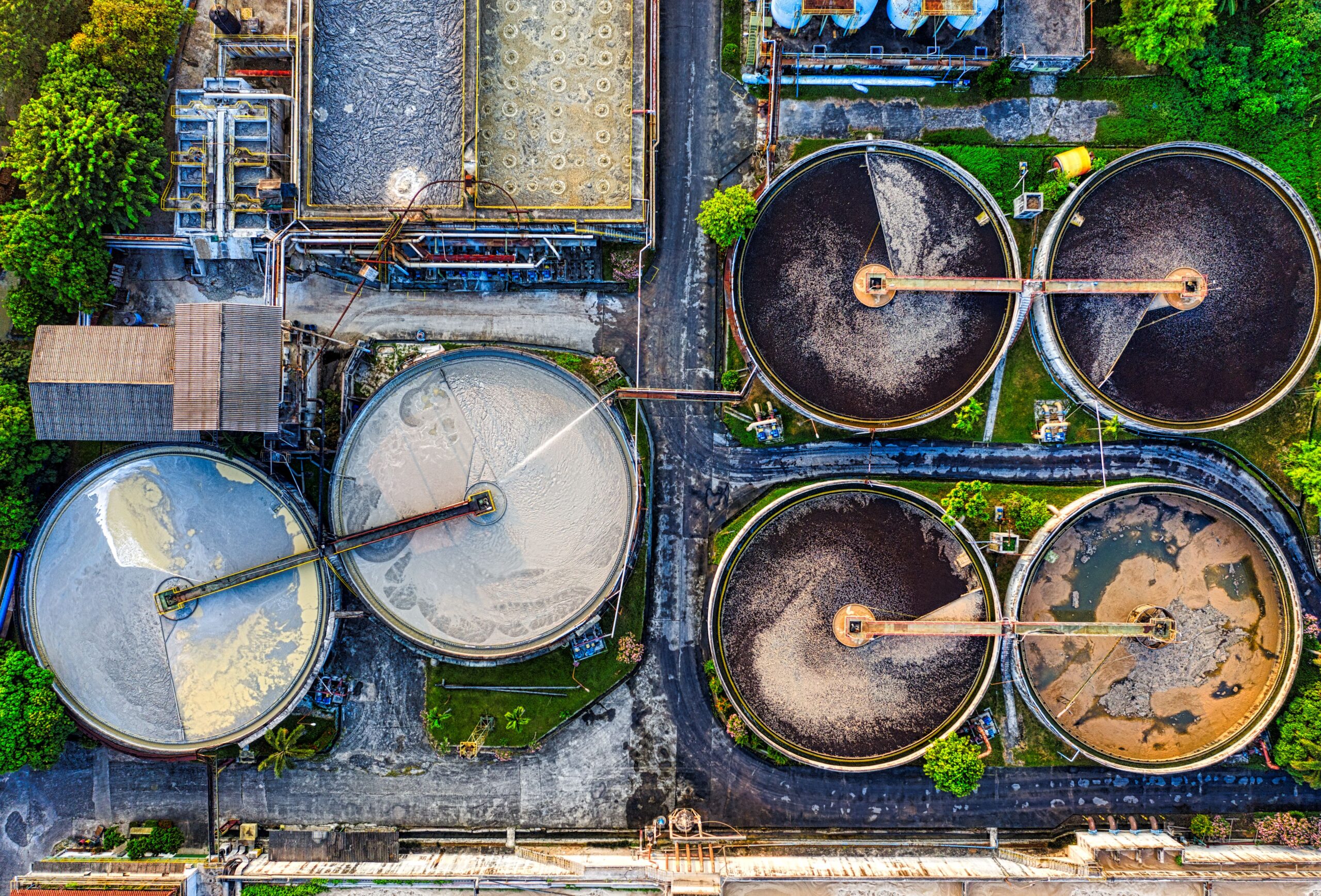
Wastewater treatment is usually discussed as a pollution-control service. Wastewater is collected, treated and discharged into rivers, lakes or the sea to protect public health and the environment. However, in a hotter and drier world, this view is becoming too limited.
The time of disposing treated wastewater has passed. Treated wastewater is a reliable water resource for agriculture, industry, urban irrigation, groundwater recharge, environmental flows, cooling systems and, in some advanced systems, even drinking-water supply.
Several countries and regions have already moved in this direction. Their experience should inform Luxembourg and other European cities to move towards utilizing treated wastewater as part of a serious water-management strategy.
Singapore: Turning Used Water into NEWater
Singapore is one of the best-known examples of advanced wastewater reuse.
Singapore has limited natural water resources. Instead of treating wastewater only as something to discharge, the country has built reuse into its national water-security strategy.
Through its NEWater system, Singapore treats used water and turns it into ultra-clean, high-grade reclaimed water. Singapore’s national water agency, PUB describes NEWater as recycled treated used water that strengthens the country’s water supply during dry weather. PUB also states that Singapore currently has four NEWater plants in operation.
The treatment process is based on advanced technologies including microfiltration or ultrafiltration, reverse osmosis and ultraviolet disinfection. The U.S. Environmental Protection Agency’s summary of Singapore’s water-reuse framework also describes how treated municipal wastewater can be used for indirect potable reuse through surface water augmentation and groundwater injection.
Israel: Reusing Wastewater for Agriculture
Israel is another leading example. It reuses one of the highest shares of treated wastewater in the world, mainly for agricultural irrigation.
According to Fluence’s overview of Israel’s water-recycling system, nearly 90% of wastewater in Israel is treated for reuse, most of it for agriculture. Academic literature has also described Israel as using more than 85% of treated wastewater for crop irrigation.
The important point is not only the percentage. It is the system design. Wastewater treatment, agricultural demand, conveyance infrastructure, regulation, monitoring and reuse planning are connected. Treated wastewater becomes part of national water allocation rather than an afterthought at the outlet of a treatment plant.
Orange County, California: Recharging Groundwater with Purified Wastewater
Orange County in California provides one of the most advanced examples of indirect potable reuse.
The Orange County Water District explains that its Groundwater Replenishment System takes highly treated wastewater that would previously have been discharged into the Pacific Ocean and purifies it through microfiltration, reverse osmosis and ultraviolet light with hydrogen peroxide. The purified water is then used to replenish the groundwater basin and protect it from seawater intrusion.
The same system can produce up to 130 million gallons of water per day and serve around one million people, according to the Orange County Water District’s description of the Groundwater Replenishment System.
Windhoek, Namibia: Direct Potable Reuse
Windhoek, the capital of Namibia, is one of the world’s longest-running examples of direct potable reuse.
A report by Water & Wastewater Asia on Windhoek’s direct potable reuse system explains that the city uses treated secondary effluent from its sewage treatment works as source water and applies multiple treatment barriers to reduce microbiological and chemical risks, since 1968. It produces up to twenty-one million litres per day.
Windhoek is important because it shows that direct potable reuse is not only a new technology trend. In water-scarce contexts, it has already been used for decades when supported by strong treatment controls, monitoring and public-health safeguards.
Murcia, Spain: Reuse for Irrigation at Regional Scale
In Europe, the Region of Murcia in Spain is one of the strongest examples of treated wastewater reuse.
A SIANI article on wastewater reuse and water scarcity describes Murcia as treating approximately 98% of its wastewater through a network of around 100 wastewater treatment plants and reusing it mainly for agricultural irrigation. European water-reuse literature has also identified Murcia as one of the leading European regions for treated wastewater reuse, with reuse rates far above most of Europe.
This is especially relevant because the European Union now has a legal framework for agricultural reuse. Regulation (EU) 2020/741 sets minimum requirements for water reuse, including water-quality, monitoring and risk-management requirements for the reuse of treated urban wastewater in agricultural irrigation.
Murcia shows that reuse is not only for island states or desert countries. It can also be part of regional water resilience inside the European Union.
Luxembourg: Strong Treatment, Limited Reuse
According to Luxembourg’s public wastewater dataset, around 98% of the population is connected to a municipal biological wastewater treatment plant, and around 98% of the pollution load is connected to biological treatment plants. The same public dataset on wastewater treatment plants in Luxembourg reports 117 treatment units and a total installed capacity of 1,092,735 population equivalent.
However, the system is still largely designed around the conventional model: collect wastewater, treat it and discharge the treated effluent into rivers. Ofwaasser explains Luxembourg’s wastewater infrastructure as a system in which wastewater is treated through mechanical, biological and chemical processes before being discharged into a watercourse. The city’s network covers about 600 km and is mostly designed as a separate drainage system, with separate wastewater and rainwater drainage in 71% of the network.
At present, Luxembourg’s publicly described system still focuses mainly on treatment before discharge into rivers, rather than large-scale planned reuse for irrigation, industry, municipal cleaning or groundwater recharge. Research is beginning to explore the issue, yet treated wastewater reuse does not appear to be a mainstream national water-management practice.
Treatment Is Not the Same as Reuse
This distinction is important.
Luxembourg’s wastewater system is based mainly on mechanical, biological and chemical treatment, with more advanced treatment being added in some facilities. Luxembourg is also moving toward additional technologies for removing micropollutants. Luxembourg Times has reported that several wastewater treatment plants in Luxembourg are expected to be equipped with technologies to remove micropollutants in the coming years.
These upgrades show that Luxembourg is not technologically static. Its treatment infrastructure is improving. Nevertheless, advanced treatment for cleaner discharge is not the same as a planned reuse system.
A country can have high wastewater-treatment coverage and still have low wastewater reuse. Treatment protects rivers from pollution. Reuse turns treated water into a managed resource.
Luxembourg’s current system appears to be much closer to the first model than the second. Wastewater is collected and treated to protect receiving waters, but treated effluent is generally discharged into surface water rather than systematically reused for irrigation, municipal cleaning, industrial processes, groundwater recharge or other planned applications.
That may have been acceptable when water availability seemed stable. As heatwaves, and droughts will grow water demand in Luxembourg, treated wastewater should be reconsidered as part of the national water balance.
Where Reused Wastewater Could Fit in Luxembourg
It is time for Luxembourg to ask some practical questions:
Could treated wastewater be reused for agricultural irrigation in selected areas? Could it support municipal irrigation of parks, trees and sports fields during drought periods? Could industrial zones use reclaimed water for cleaning, cooling or process water? Could construction activities use treated non-potable water instead of drinking water? Could public landscapes or roadside vegetation be supplied from reclaimed water where health and environmental conditions allow?
The answer depends on quality standards, infrastructure, distance between treatment plants and users, cost, public acceptance, monitoring capacity and risk management.
This is exactly where digital tools become important.
The Digital Layer: From Treatment Plants to Water Reuse Systems
Wastewater reuse is not just a treatment-plant decision. It is an operational system.
Authorities need to know how much treated water is available, at what quality, in which season, from which plant, near which potential users and under which regulatory conditions. They also need to monitor demand, storage capacity, distribution routes, water quality, risk controls and actual reuse volumes.
Digital systems can support this transition by mapping treatment plants, discharge points, potential reuse users, water-quality classes, infrastructure gaps, agricultural demand, industrial demand, drought periods and compliance requirements.
Instead of seeing a treatment plant only as an endpoint, a digital system can show it as a potential water-resource node.
From Wastewater Treatment to Water Resource Recovery
The examples from Singapore, Israel, Orange County, Windhoek and Murcia show that treated wastewater can become a strategic water resource when infrastructure, regulation, technology, monitoring and public trust are aligned.
As heatwaves and drought pressures increase, this deserves a serious policy and operational debate in Luxembourg. Wastewater treatment should no longer be seen only as a pollution-control obligation. It should also be seen as part of climate adaptation, water security and circular resource management.
Fussbann Group develops digital solutions that help public authorities, municipalities and private actors operationalise environmental management. In wastewater management, this means supporting systems that can map treatment infrastructure, monitor water quality, identify reuse opportunities, connect treated-water supply with demand and help institutions move from discharge-based wastewater management to circular water-resource recovery.
The future of wastewater treatment is not only cleaner discharge. It is smarter reuse.
Read our article on Water Management in a Hotter Europe: Why Luxembourg Needs to Adapt Now.