
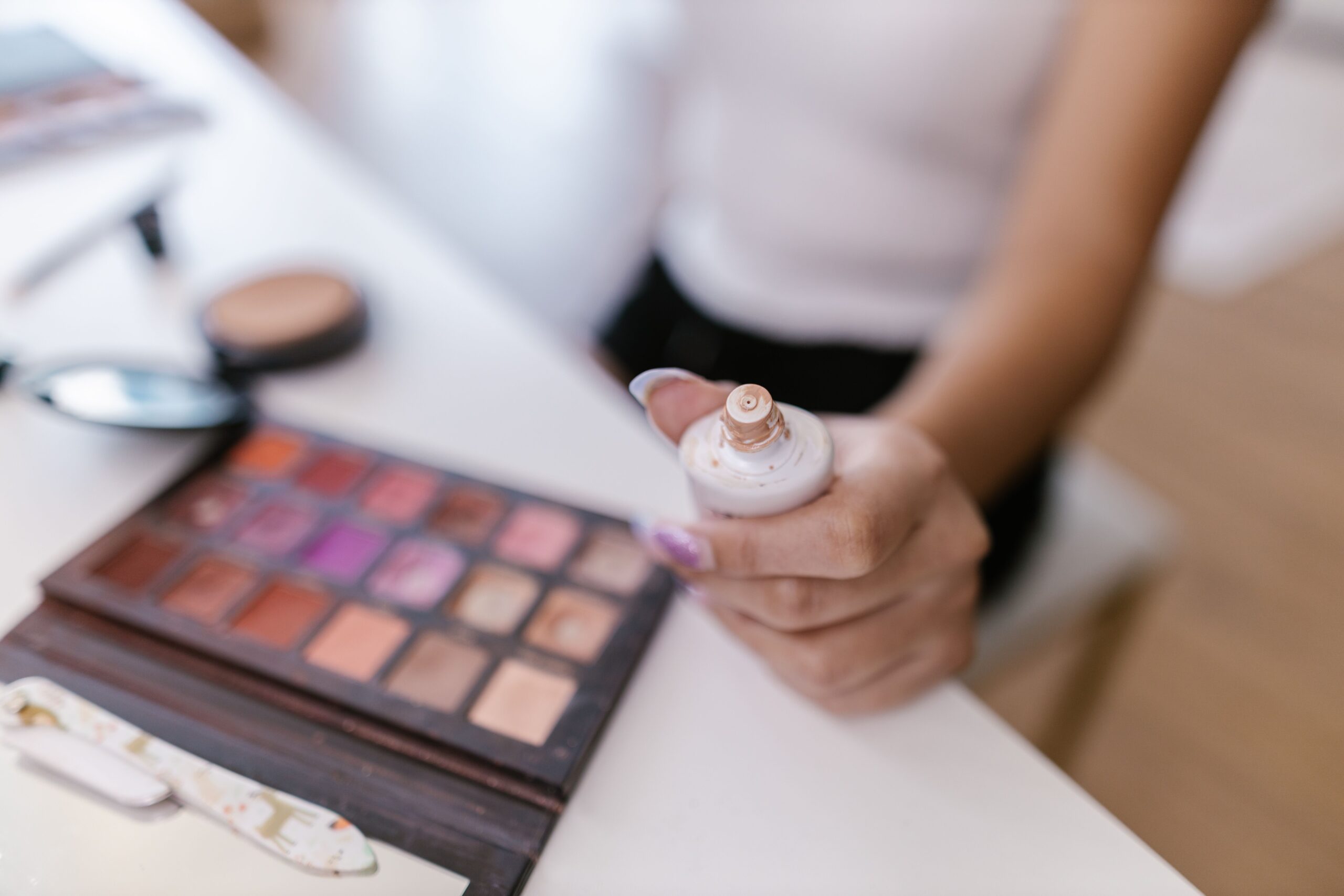
Most cosmetics, beauty products and personal-care products contain many different types of chemicals, natural or synthetic; that is not a secret. Take a look at the back of your favourite cosmetic container or packaging to find the ingredient list. The European Union has strict rules governing the chemicals that may be used in these products.
The principal legislation is the EU Cosmetics Regulation, Regulation (EC) No 1223/2009, which prohibits certain substances, restricts others to specified concentrations or uses, and requires every cosmetic placed on the EU market to undergo a safety assessment. The framework is supported by REACH, Regulation (EC) No 1907/2006, and the Classification, Labelling and Packaging Regulation, Regulation (EC) No 1272/2008.
Cosmetic ingredients are continuously reviewed by scientific bodies, particularly the EU Scientific Committee on Consumer Safety. New evidence can result in additional restrictions, lower permitted concentrations or complete prohibitions.
Nevertheless, substances prohibited in the EU continue to be identified in products available to consumers. Furthermore, scientific evidence and regulatory assessments can take considerable time—sometimes years—to identify emerging concerns, particularly for substances used across multiple everyday products. Parabens are a well-known example. They have been widely used for decades as preservatives in cosmetics and personal-care products. Subsequent research raised concerns about the potential endocrine effects of some parabens, prompting repeated scientific assessments and regulatory changes. The EU has prohibited certain parabens, imposed stricter limits and conditions on others, and retained methylparaben and ethylparaben as authorised preservatives within specified concentrations.
This raises an important question for the consumers: if the EU regulatory framework is so strict, why do non-compliant products still reach the shelves?
Imports and fragmented supply chains
Products manufactured outside the European Union are not legally exempt from EU cosmetic rules. A cosmetic made in the United States, China or another country must comply with EU requirements before it can be placed on the European market.
In practice, however, market-surveillance authorities cannot test every product. They can inspect only part of the enormous volume of cosmetics entering through conventional retailers, online marketplaces, parallel imports and smaller distributors.
Products may reach consumers because of inadequate documentation, fraudulent declarations, unauthorised imports, outdated formulations, counterfeit goods or failures by the importer or designated EU responsible person.
Butylphenyl methylpropional, commonly known as Lilial or BMHCA, illustrates the problem. It was previously widely used in fragrances and cosmetics but was prohibited in EU cosmetic products after being classified as toxic to reproduction. Nevertheless, it continues to be detected in products reported through the EU’s Safety Gate rapid alert system.
According to the European Commission’s 2024 Safety Gate results, cosmetics accounted for 36 per cent of reported dangerous products, and 97 per cent of the cosmetic alerts concerned products containing BMHCA.
Ingredient lists is good but not enough
Cosmetic ingredient lists identify the substances used in a product, generally in descending order of concentration. However, manufacturers are not normally required to disclose the exact concentration of every ingredient to consumers.
Detailed composition information must be included in the Product Information File and considered in the safety assessment, but it is not usually presented on the packaging.
This creates an important information gap. The presence of a chemical alone does not determine risk; its concentration, route of exposure, frequency of use and interaction with other ingredients are also relevant.
Consumers may therefore use a product for years without knowing the quantities of particular substances to which they are exposed. Scientific evidence and regulatory assessments may also take considerable time to identify emerging concerns, particularly for substances used across multiple everyday products.
Fragrances do not have an ingredient list
Perfumes and fragranced cosmetics are often perceived as containing extracts of flowers, herbs or other natural materials. In reality, modern fragrances commonly contain mixtures of mostly synthetic aromatic chemicals designed to reproduce, modify or stabilise particular scents.
Fragrances are subject to the general prohibitions, restrictions and safety requirements of EU cosmetic law as well as Regulation (EU) 2023/1545 on fragrance-allergen labelling. However, their complete molecular composition is not normally disclosed on the product label and may not be reproduced molecule by molecule in the cosmetic brand’s regulatory documentation. A proprietary fragrance mixture can instead be identified by its commercial name, code number and supplier, while the detailed formula remains with the fragrance manufacturer as confidential business information.
Consumers therefore do not see an ingredient list, only individual fragrance allergens that must legally be declared above specified thresholds.
The cosmetic safety assessment must account for the fragrance mixture, but it may rely on safety information supplied by the fragrance house rather than on full public or centrally accessible disclosure of every constituent and concentration.
This creates an important transparency and oversight gap. Individual fragrance chemicals remain legally subject to EU prohibition or restrictions on certain chemicals, but usually nobody can access a complete, searchable and molecule-level record of every fragrance formulation placed on the market. Compliance consequently depends heavily on information generated and retained within the commercial supply chain.
What does “Made in the EU” actually mean?
The origin label, as in Made in the EU, does not tell consumers about the origin of individual ingredients or the complexity of the product’s supply chain.
European brands do not necessarily manufacture every ingredient, component or package within Europe.
A product may contain raw materials, fragrances, containers or other components sourced internationally. Under EU customs rules, product origin is generally determined by where the last substantial and economically justified processing took place. There is no simple requirement that every ingredient—or a fixed percentage of the product—must originate in Europe.
A European company may also manufacture products under contract in China, the United States or elsewhere. This is legal, provided that the product placed on the EU market complies with European requirements and an EU-based responsible person accepts legal responsibility for it.
Are there tools to help consumers?
Several applications now help consumers scan cosmetic products and interpret ingredient lists.
Yuka and INCI Beauty are among the better-known examples. They can help consumers identify ingredients and compare products without having to understand complex chemical terminology.
However, their ratings must be interpreted carefully. These applications usually rely on the publicly available ingredient list. They do not normally have access to exact concentrations, complete safety assessments or confidential formulation data.
Yuka, for example, categorises ingredients according to potential concerns such as endocrine disruption, allergenicity, irritation, carcinogenicity and environmental effects. The ingredient assigned the highest level of concern substantially determines the product’s overall score. This makes the application useful as a precautionary screening tool, but not equivalent to a full product-specific risk assessment.
Such applications are therefore valuable for awareness and comparison, but they cannot independently determine whether a product complies with EU law or whether its actual use presents an unacceptable risk. Different applications may also assign different scores because they use different evidence, assumptions and precautionary thresholds.
The EU-funded Scan4Chem App
The EU-funded LIFE AskREACH project developed Scan4Chem with the involvement of the Luxembourg Institute of Science and Technology.
Scan4Chem allows consumers to scan product barcodes and request information about substances of very high concern in solid articles such as furniture, clothing, electronics and toys. When information is unavailable, consumers can use the application to contact the supplier and exercise their right to know under REACH.
The application does not cover cosmetics because cosmetics are chemical mixtures rather than “articles” under the relevant REACH provisions. Its experience nevertheless demonstrates the limitations of a system that depends heavily on consumers submitting products and requesting information from individual suppliers. However, in most cases suppliers do not respond to the inquiries made on this App.
Coverage will remain incomplete when information is not supplied systematically at source.
Effective product composition tools
A reliable product-composition tool should not depend primarily on consumers photographing labels, entering ingredients or sending individual requests to manufacturers. Moreover, consumers should not sweat to find and understand the information on the types of chemicals used in their every day products.
The European Union already holds or regulates much of the necessary information through cosmetic notifications, product information files, responsible-person requirements, ingredient databases and market-surveillance systems.
The next step should be to connect these sources to a verified, EU-supported consumer platform.
By scanning a barcode, a consumer should be able to confirm:
- that the product has been notified for the EU market;
- the identity of the responsible company;
- the official and current ingredient list;
- whether the formulation has changed;
- applicable restrictions and allergen warnings;
- whether the product has been recalled or reported through Safety Gate; and
- whether the information was verified by the manufacturer or entered by a user.
The purpose would not be to reduce complex toxicology to a simple red or green rating. It would be to make product composition and regulatory status traceable from the manufacturer to the shelf.
For such a tool to function effectively, the EU should work directly with developers, manufacturers, importers and market-surveillance authorities to populate and maintain a verified product database. Information should be updated automatically when formulations change, substances are restricted or products are recalled.
Ingredient lists were an important step towards transparency. They should no longer be the final one.
Read next: